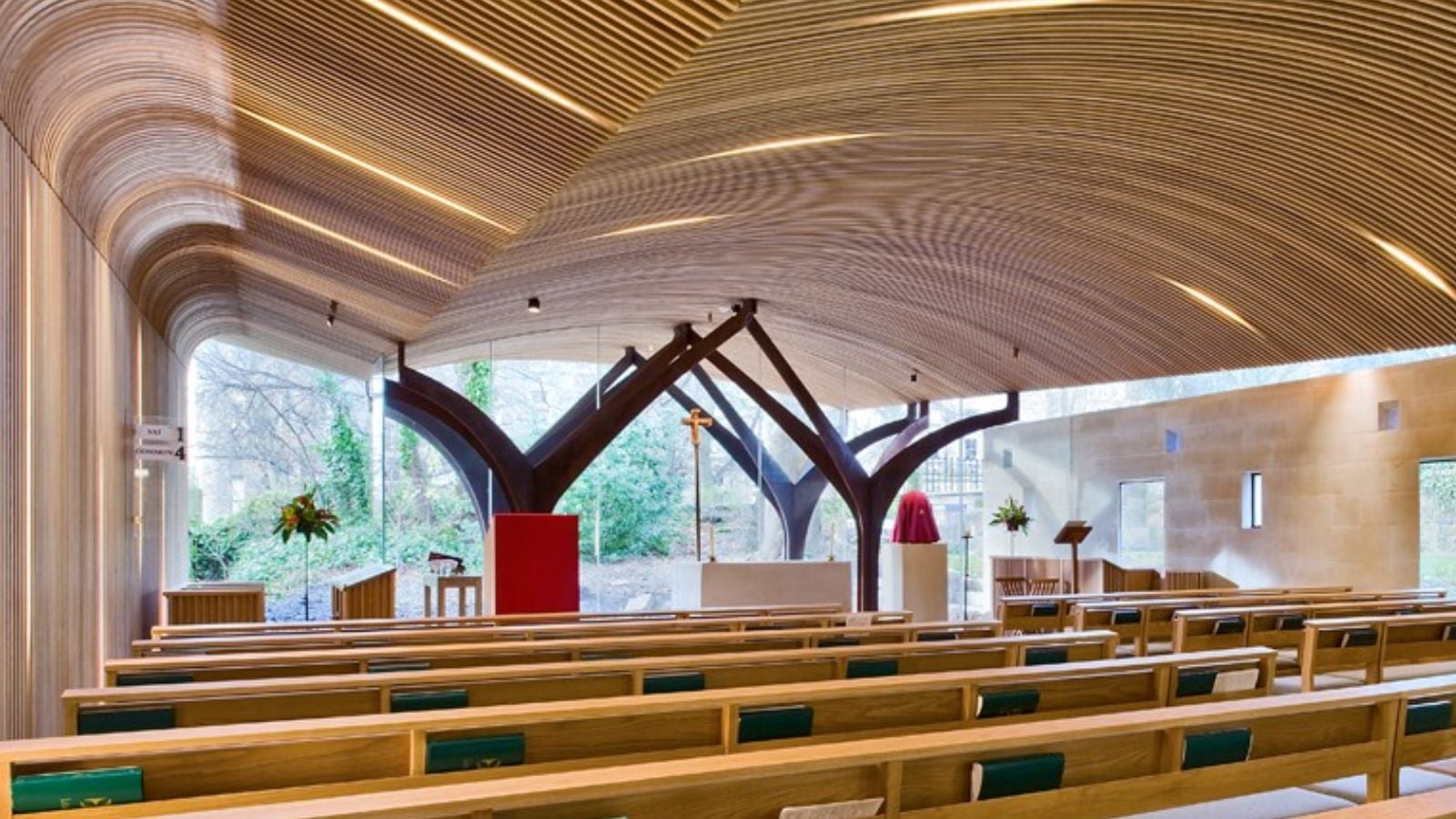
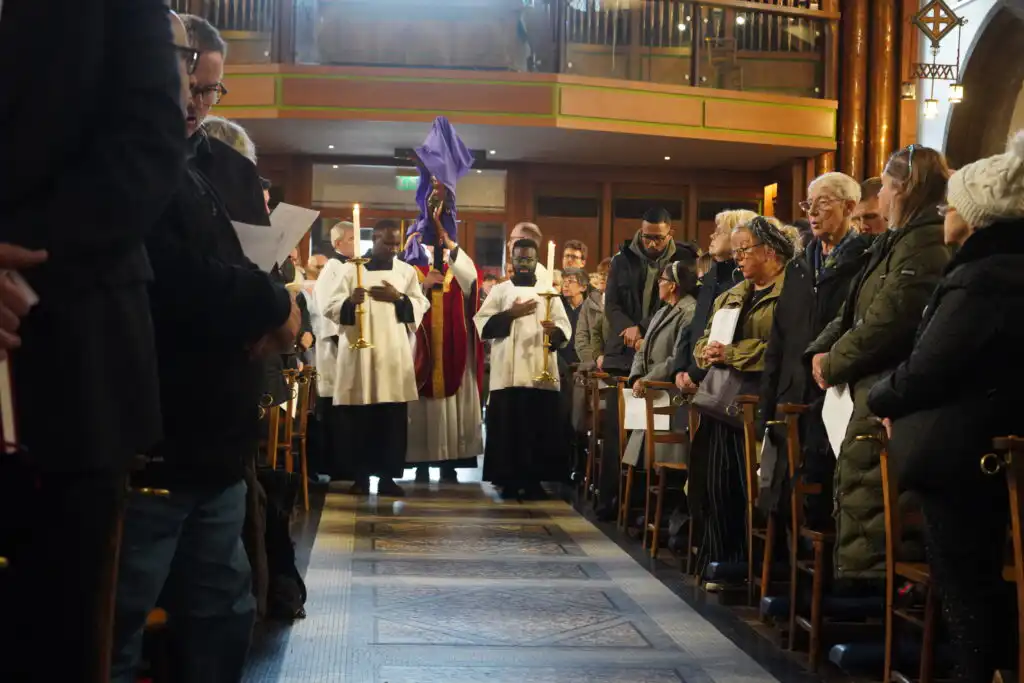
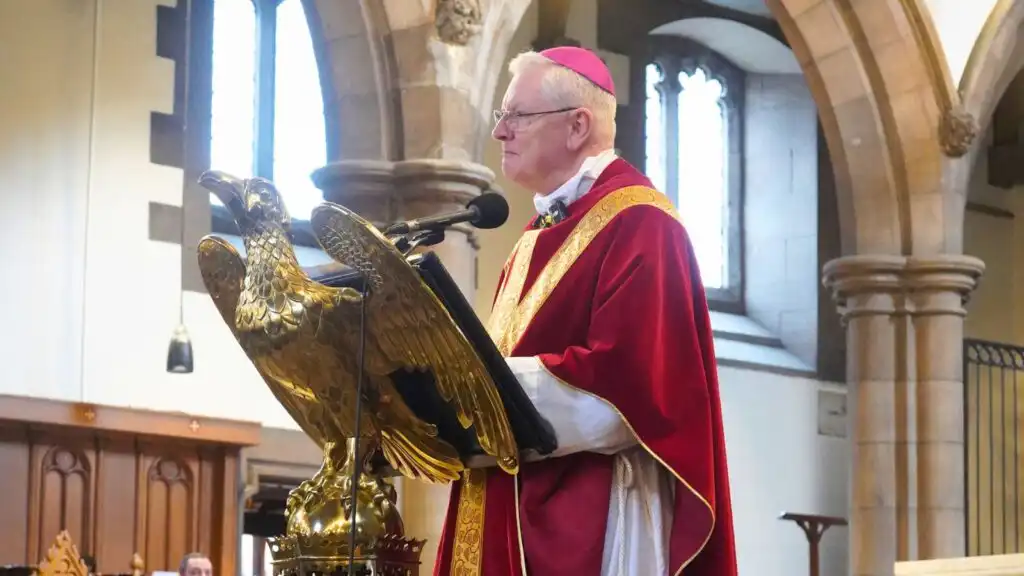
Here is the Homily of Archbishop Cushley for Friday of the Passion of the Lord at St Mary’s Metropolitan Cathedral, Edinburgh.
“My dear friends, today we continue our solemn journey as we go with the Lord, to die with him today, and to rise with him on Easter Sunday.
We have just heard the Passion of St John, as we always do on Good Friday.

Last night, in our preparations for today, we were accompanied by St Paul and his account, the earliest by far that we have, of the Lord’s Supper the night before Jesus died.
Now, we know that Paul was a contemporary of Jesus.
He wasn’t from Palestine, and came from a Greek-speaking area of what is now South West Turkey, but we are fairly certain he studied the Scriptures in Jerusalem and knew the city and its people.
So, was he aware of events in Jerusalem when Jesus was, very publicly and brutally, condemned and put to death?
If he was, he doesn’t tell us.
What we do know is that by the time he dramatically becomes a Christian and his famous conversion takes place “on the road to Damascus”, Christianity is well established, and it has, by his own account, been persecuted by him vigorously.
But something happens to him that is truly dramatic: he is then baptised and becomes a Christian, and he starts to proclaim that Jesus is the Son of God, to the great confusion of everyone around him, believers and non-believers alike.
Something very profound has happened to Paul, and his life is never the same again.
And indeed, after St Paul becomes a Christian, because of his letters, it’s fair to say that the whole world will never be the same again.
Our second reading today from the Letter to the Hebrews, a letter from the school of St Paul and reflecting his theology, gives us, not so much an account of the Passion, but a profound explanation of it.
The Letter to the Hebrews is one of the most important early expositions of what we have been witnessing today in St John’s Gospel.
But instead of giving us a blow-by-blow account of the Lord’s death on the Cross, Hebrews gives us an early and thus very helpful reflection upon its significance.
It’s a lengthy and dense piece of writing, and not easy to grasp at one sitting, but the bit we hear from it today is a like a handy little summary of what we need to grasp, and what we need to take away from all the events of today.
And so, it says, “In the days of his flesh, Jesus offered up prayers and supplications, with loud cries and tears, to him who was able to save him from death” – and his prayer was heard. Jesus’s prayer, offered aloud and in silent tears, is answered, but not in the most obvious and likely way that we might expect.
Jesus is not spared a cruel death; he is humiliated and tortured; he truly dies on the Cross; but – and here is where his prayer is heard – he is raised again to life.
He is exalted, super-exalted above all creation. In Philippians, Paul tells us that Jesus is therefore rightly given the name LORD, as he is revealed on the Cross to be the Son of God, equal to God.
In Jesus’s death and resurrection, God reveals His mighty hand, and He reveals that the Father has received and listened favourably to Jesus’ prayer. Although He was God’s son, Jesus has learned obedience through what he suffered.
And, having been perfected through obedience, He becomes the source of eternal salvation to all who obey him. And to us who obey him.
And so, what is it that we are to do with Good Friday? What does it change for us, once we cross the threshold and step back outside today?
We can take with us how Jesus was perfectly obedient to the Father’s will.
And we can take with us how Jesus’s perfect obedience was answered, no matter how unexpectedly at the time, with salvation, with life and with resurrection.
And we can resolve to serve, and to be obedient to Jesus Christ, our living Lord, so that he can become the source of eternal salvation for us, who obey him.
Let’s notice the rebellion in our hearts that rarely leaves us; resolving to change, let’s also resolve to be obedient to Jesus Christ, just as he was obedient to the Father, even to death on the Cross; and let’s resolve to be obedient to Christ, the unique source of our life, our salvation and our hope.”